The horse is used as a co-therapist because clients are able to self-identify with this prey animal's vulnerabilities, which helps to normalize the client's experiences. The horse's ability to engage in a positive therapeutic relationship with the physically and mentally disabled provides positive reinforcement for healing in terms of improved sense of self and motivation. This is especially helpful in reducing physical symptoms of traumatic stress response. Lastly, the horse provides immediate feedback in which clients are able to gain self-awareness and insight into their presenting issues. 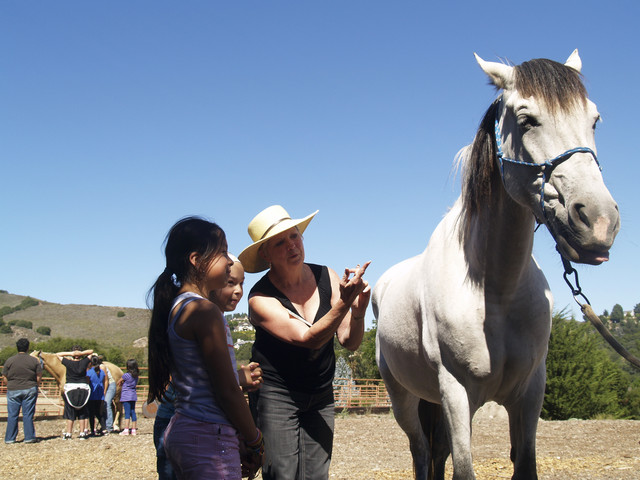 Here the equine specialist is pointing out the horses content stance. He's licking and chewing which means he's comfortable and his ears are flicked listening to the activites behind him. |
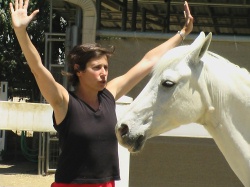 Boundaries are being set here. The horses has lifted its head in awareness but has not fleed in fear. |
Mission accomplished! A trusting bond has been created where the client is able to touch Penny's hindquarter. Pennys expression is the same as the first horse, head level and ears listening. Goldie is relaxed in the back ground awaiting her turn. 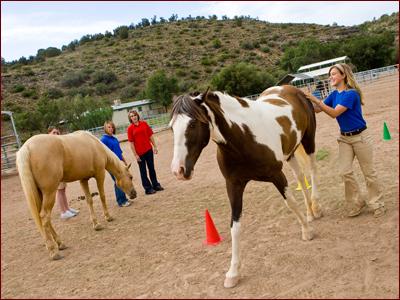 |
